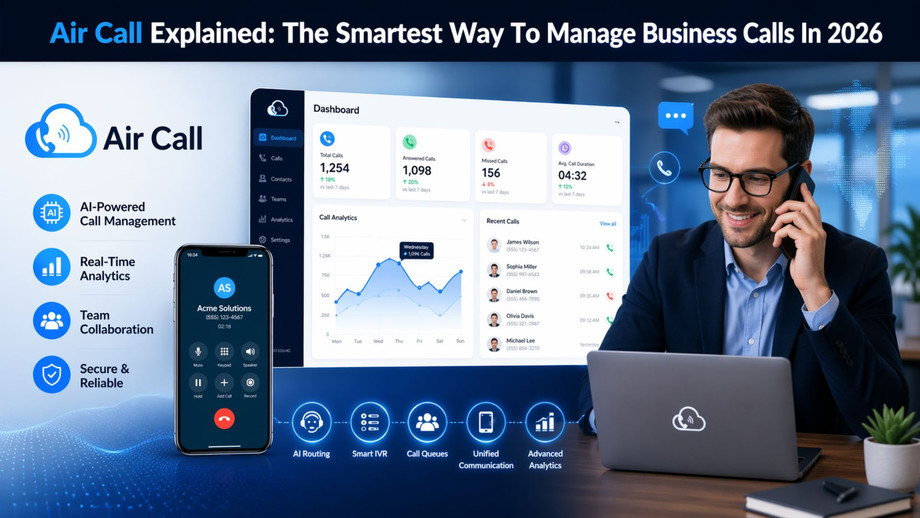
Ever felt like your business is losing customers simply because calls are missed, delayed, or poorly managed? That’s a bigger problem than most teams realize. Air Call is designed to fix exactly that by turning your entire calling system into a flexible, cloud-powered communication hub.
From my experience working with growing startups and support teams, the biggest shift happens when companies stop relying on traditional desk phones and move to intelligent calling systems. The difference is immediate: faster response times, better tracking, and happier customers. In this guide, I’ll walk you through how it works, where it excels, and where you should be cautious.
Cloud telephony isn’t just a trend; it’s a fundamental shift in how communication happens.
Instead of being tied to wires and office desks, calls are handled through the internet, giving teams complete flexibility.
In one SaaS company I advised, switching to cloud calling eliminated nearly 40% of missed customer queries within the first month simply because calls were no longer tied to one location.

One of the most noticeable improvements is how structured everything becomes.
1. Smart Distribution of Calls
Calls are automatically routed to the right person, reducing transfer time and frustration.
2. Shared Call Visibility
Everyone on the team can see call logs, notes, and history in one place.